
Living in Nosara as an Expat: What Nobody Tells You Before You Move
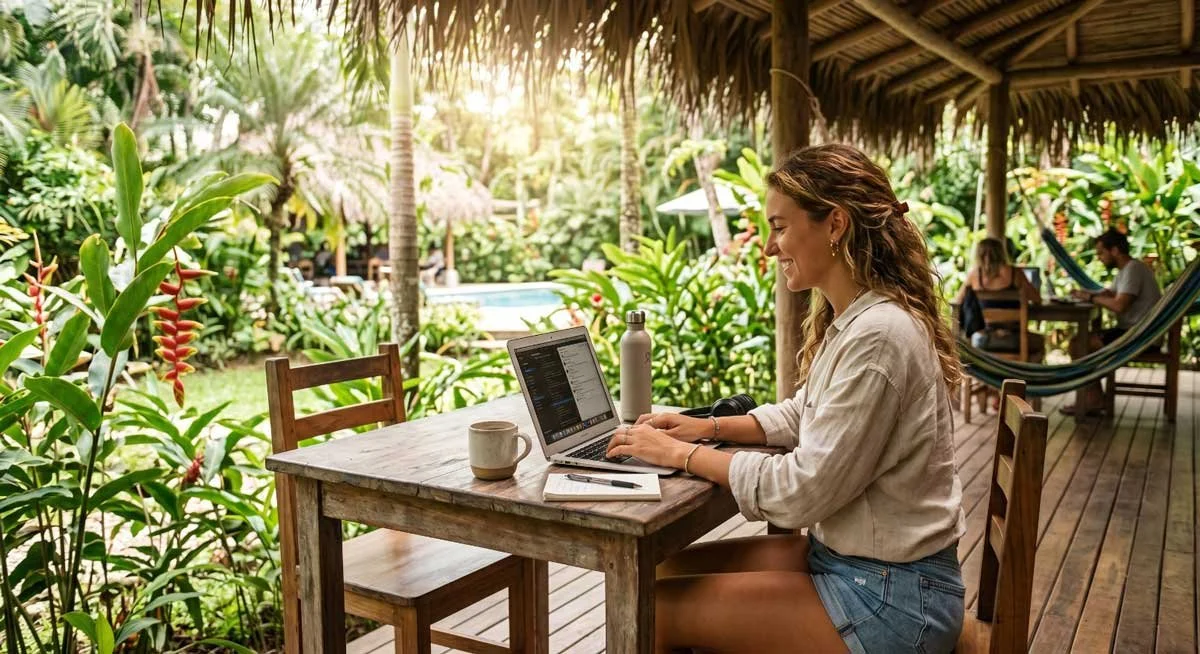
Everyone knows Nosara as a surf and yoga destination. But there's another Nosara — the one you discover after the second week, once the traveler's high settles and real life begins. Every year, hundreds of foreigners arrive here looking for a change, and many of them stay. Not because it's perfect, but because it offers something very few communities in the world can match: a genuine quality of life built on nature, community, and a pace that forces you to breathe. Here's what the travel blogs don't usually tell you.
The first thing that strikes people who come to stay is the expat community. Nosara has one of the most established foreign populations in all of Costa Rica — a remarkable mix of Americans, Canadians, Europeans, and Latin Americans who have lived here anywhere from five to thirty years. This isn't a tourist bubble: it's a real community with its own support networks, farmers markets, WhatsApp groups, cultural events, and even sports leagues. Integrating is easier than it sounds, especially if you arrive with an open attitude and without expecting everything to work the way it does back home.
The cost of living deserves an honest conversation. Nosara is not cheap by Central American standards. A furnished house near the beach can run anywhere from $1,200 to $3,500 per month depending on the season and location. Local supermarkets are priced similarly to a mid-sized American city, though the town's farmers market offers locally grown fruits, vegetables, and proteins at very reasonable prices. Eating out every day adds up fast; cooking with local produce is a very different story. The key is learning to live like a tico, not like a tourist.
One of the most underestimated aspects of living in Nosara is the emotional weight of geographic isolation. Nosara is roughly 4 hours from San José by road — part of it unpaved — with no direct access to specialized hospitals or large shopping centers. People coming from big cities sometimes experience what expats call "the month-three dip": when the honeymoon with paradise ends and everyday reality sets in. The good news is that almost everyone who reaches that point and pushes through it says it was the best filter of their life.
What Nosara does give you — and what's nearly impossible to put a price on — is time. Time for dawn surf sessions, for genuinely getting to know your neighbors, for cooking, reading, and thinking. The local tico community is warm and open to those who show real respect for their culture and land. And the nature — the mangrove, the beach, the howler monkeys at sunrise — quickly becomes part of your routine, not a backdrop you admire from a distance.
If you're thinking about making the leap, the unanimous advice from those who already have is the same: come and stay for a month first. Not as a tourist, but as a temporary resident. Rent a house, shop at the market, work from here, meet the people. At Malinche House we offer extended stays designed exactly for that — so you can experience Nosara for real before deciding if this is your place in the world.