
Nosara's Mangrove: The Secret Ecosystem Between River and Sea
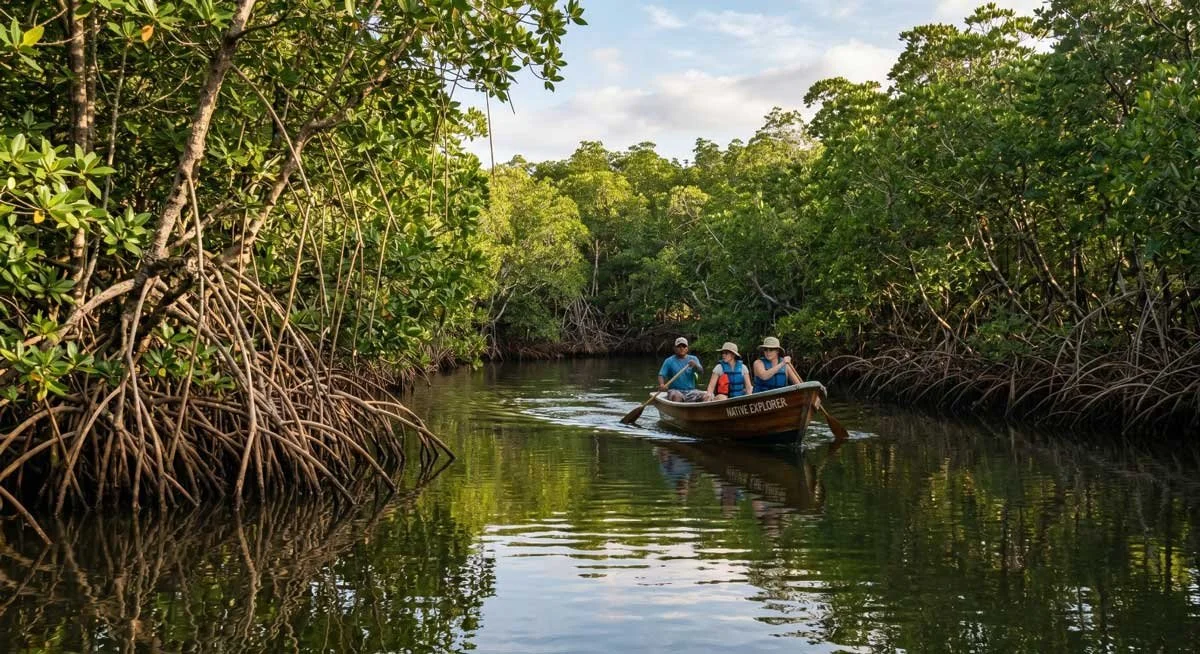
Just a few kilometers from the waves of Playa Guiones, where the Nosara River meets the Pacific Ocean, a completely different world exists: the mangrove. This transitional ecosystem — where freshwater and saltwater blend in perfect balance — is one of the most productive and biodiverse on Earth, and Nosara is fortunate to have one that remains nearly untouched. Few visitors ever find it. That is exactly what makes it extraordinary.
Mangroves are the coastal lungs of Costa Rica. Their interlocking aerial roots, rising from the water like fingers from the earth, serve vital functions: they filter the water, protect the coastline from erosion, act as a natural buffer against storms, and provide nursery habitat for dozens of marine species. Without mangroves, many of the fish served in Nosara's restaurants simply wouldn't exist. They are the invisible origin of the entire food chain.
Paddling through the Nosara mangrove by kayak or stand-up paddleboard is an experience that redefines the idea of quiet adventure. Beneath the interlocked canopy of trees, the noise of the world fades away, leaving only the sound of water, birds, and your own breathing. In these waters it's possible to spot American crocodiles, herons, kingfishers, white-faced capuchin monkeys leaping between branches, and in season, even otters. Every bend in the river holds a surprise.
The best time to enter the mangrove is at dawn or late afternoon. In low-angle light, the reflection off the water turns the journey into something almost dreamlike. Several local operators offer guided tours from the river mouth, with a focus on environmental education and wildlife observation. If you prefer to explore independently, kayaks can be rented at Playa Garza, and you can paddle upriver following the gentle push of the incoming tide.
The Nosara mangrove is also a powerful reminder of why this area was designated the Ostional National Wildlife Refuge and why the local community has spent decades resisting uncontrolled development. This ecosystem exists because of a collective decision to protect it. Visiting it with care — quietly, without plastics, without disturbing its rhythm — is the best way to honor that commitment.
From Malinche House, reaching the mangrove is effortless: a short ride by bike or tuk-tuk brings you to the most popular entry points. If you'd like to add this experience to your itinerary, we're happy to connect you with trusted local guides. Nosara doesn't end at the shoreline — it begins where the river meets the sea.